Automatic tool changers let one robot handle several processes, while deburring tools with built-in compliance and collision sensors safely automate finishing work.
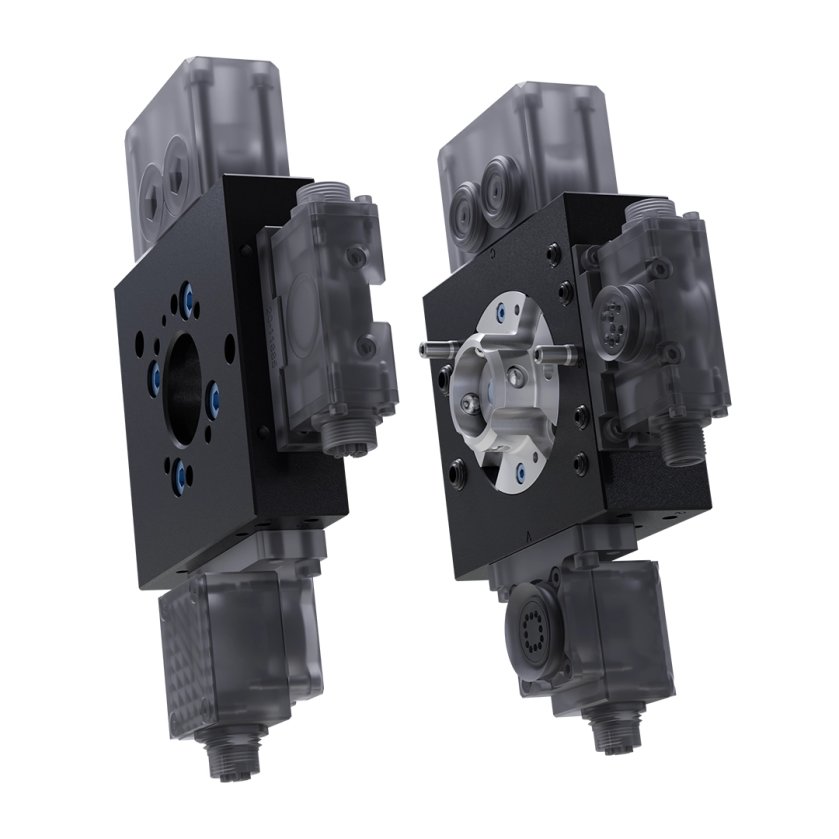
The fastest way to get more out of robots on a production line is to have them switch tools and take on several tasks. With an automatic tool changer, the robot picks up and locks grippers, welding guns and spindles from a tool stand on its own, passing electrical, pneumatic and fluid signals straight through to the tool. The same approach scales from 1.4 kg-class units for small collaborative robots to 4,000 kg-class units for large robots.
Work that used to depend on human hands, such as deburring, deflashing and surface finishing, is automated with dedicated tools that have built-in compliance. The tool absorbs part dimensional variation and robot path error by itself to work with constant force, and for assembly and insertion, compliance devices correct position errors mechanically. Adding a collision sensor protects the robot and tool from unexpected collisions.
Typical uses
- Automatic tool-changing cells that handle multiple processes with one robot
- Automated deburring and parting-line removal for castings and machined parts
- Position error correction for pin insertion and part mating assembly
- Protecting robots and tools with collision detection and shock absorption